EMERGENCY/AH: 073 335 9322 reception@kloofspca.co.za
Your Change helps us Make a Change!

Your Change helps us Make a Change!

How you can support us:

We are needing to generate revenue and in these difficult times, even your small change adds up and can help us to help animals.

Please consider having a tin in your retail outlet, school, office or even in your home for loose change. If you would like to be allocated tins and /or are prepared to assist in distributing tins or collecting please contact Janine on pr@kloofspca.co.za.

Alternatively, you may collect tins from our reception area. Please notify Janine by e-mail if you have a tin so that we can ensure we have a record of all our Tin outlets/collectors.

Upon signing up, you hereby give permission to use your information as set out in the Kloof SPCA Privacy Policy.

Address
29 Village Rd, Kloof, KwaZulu-Natal, South Africa, 3640

General Enquiries Email: reception@kloofspca.co.za
Phone: 031 764 1212/3
Fax: 031 764 6665
Emergency: 073 335 9322
Contact Us

Information Officer >
Privacy Policy >
Banking Details >

August – Africanis month

August – Africanis month

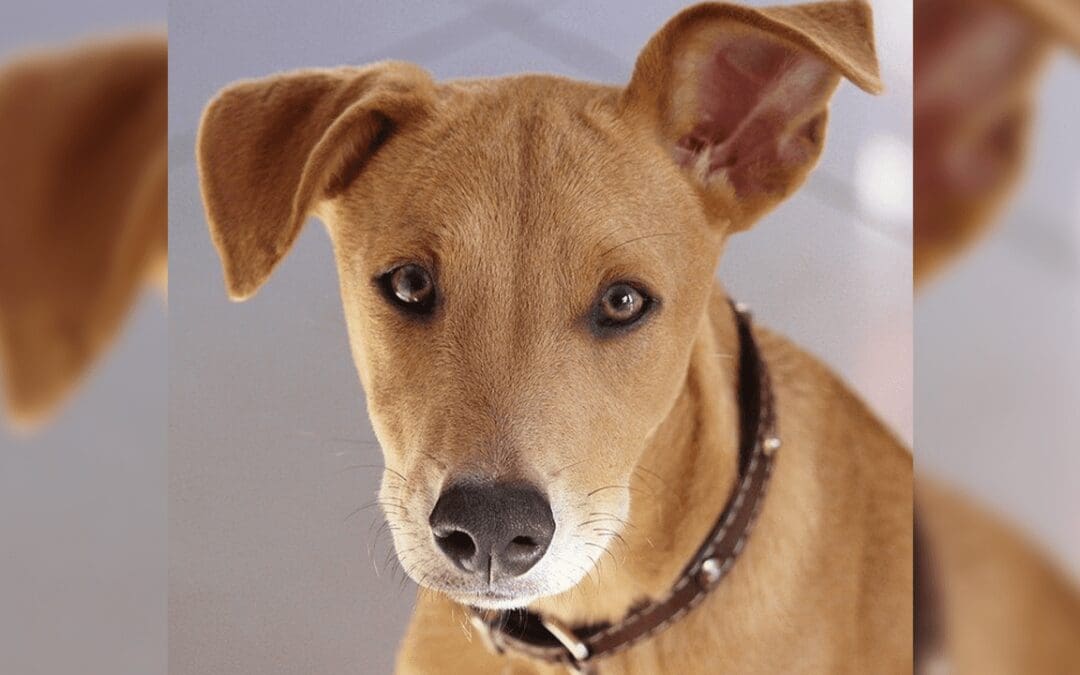
Did you know the month of August was Africanis month?

The Africanis is part of Africa’s unique heritage and biodiversity, and deserves recognition and protection.

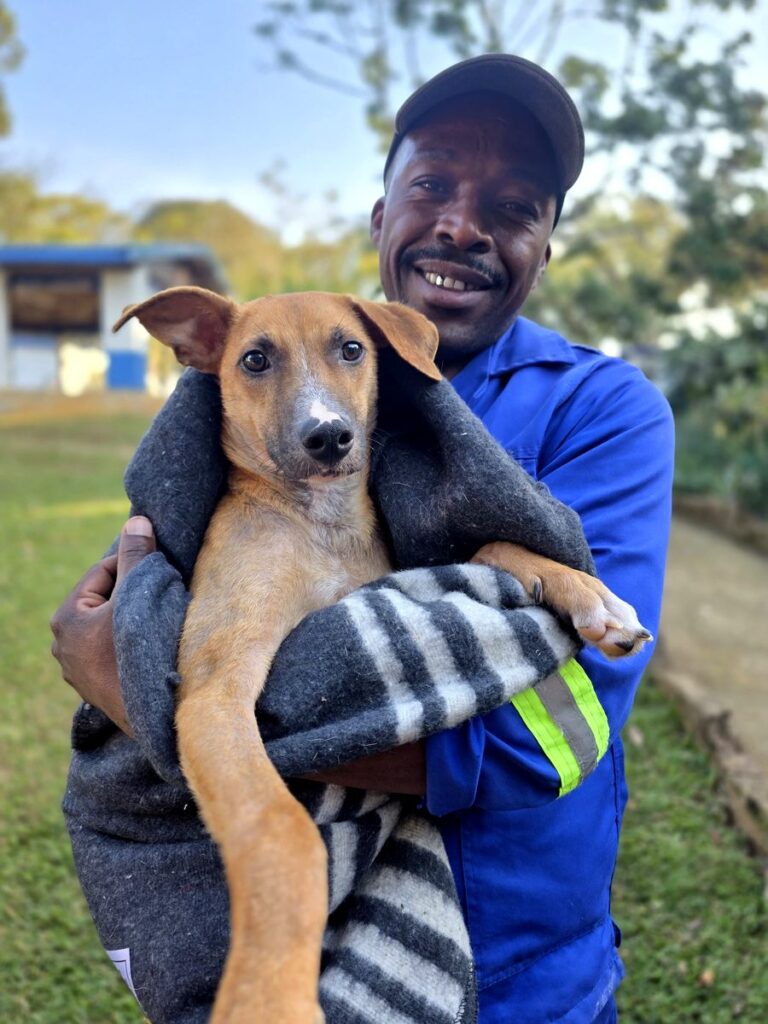
The Africanis is an extremely intelligent, loyal and healthy breed and become very attached to their owners.  They can be territorial and are very watchful and protective of their loved ones, but are also affectionate and playful. They are easy to train as they strive to please their owners. The Africanis requires very little grooming and is a low-maintenance dog, making them the ideal pet. There is no question about it – the Africanis breed is a special one. Yet they are often abandoned, homeless or rescued from townships or rural areas. There are so many Africanis dogs currently at our Kloof and highway SPCA looking for homes. Please don’t overlook this incredible breed when you are looking to adopt.

What makes the Africanis unique is that the dog is a mainly a result of natural, not human, selection. Unlike Western dog breeds, whose bodies have been artificially shaped by the arbitrary and sometimes cruel standards of the Kennel Clubs, Africanis dogs are healthy and valued only for their usefulness and loyalty.

The Africanis is descended from dogs pictured in ancient cave art and on Egyptian murals. The earliest remains of the domesticated dog in Africa was found in the Nile delta and dated to 4,700 BC. Today, Africanis dogs are found all over Southern Africa. The earliest record of a domestic dog in South Africa is dated 570 AD, on the farm Diamant in the Ellisras district, near the Botswana border. At the same time, domestic dogs lived south-west of Francistown, Botswana.

By 650 AD the dog is found in the lower Tugela valley, and by 800 AD in a Khoisan settlement at Cape St Francis.

The beauty of this dog is embodied in the simplicity and functionality of its build. The Africanis is a medium sized dog, of slender build and well-muscled. It is agile and supple, moves in a very natural and easy manner, and can run at great speed. The dog is found in a wide range of colours, with or without markings. A ridge of varying form can sometimes be seen on the back. The head is wedge shaped and the face is most expressive. The ears may be erect, half erect or drooping. The carriage of ears and tail is linked to the dog’s awareness of the environment. These variable physical features are of no direct influence on the physical and mental well-being of the dog. When in good condition, the ribs are just visible. The coat adapts to the seasons, and can be kept shiny with the minimum of care.

The Africanis Society of South Africa

Founded in 1998 by archaeologist Dr Udo Küsel (former Director of the National Cultural History Museum, South Africa) and Johan Gallant (dog behaviourist and writer), the Africanis Society was formed with the objective to protect and preserve the Africanis as the native landrace.

Dog experts Johan Gallant and Joseph Sithole roamed rural KwaZulu-Natal, studying and photographing the dogs they came across in kraals and homesteads. They concluded that these animals were not a mess of mongrels but members of coherent breed of dog, with a distinct behaviour and appearance.

Gallant came up with a name for the breed: “canis” (Latin for dog) and “Africa” – the Africanis. He later wrote up his and Sithole’s work in “The Story of the African Dog”, published by the University of KwaZulu-Natal Press in 2002.

Their exposure to harsh conditions and treatment over the centuries means they have evolved into a tough, hardy breed with a highly attuned survival instinct.  They are highly intelligent, extremely active and agile.

TRAINING
The Africanis is bound to its human family and territory, making it a breed of esteemed loyalty. They will follow their owners on a walk for many hours without being on a lead and are obedient and willing to please. Their high levels of intelligence make the training process a rewarding and bonding one.

HEALTH
The Africanis is a robust, healthy dog with few medical issues. Having evolved in unforgiving environmental conditions, they have developed a natural resistance to parasites, both internal and external. They will, however, still require the appropriate vaccinations but costly vet bills should generally not be a concern.

Upon signing up, you hereby give permission to use your information as set out in the Kloof SPCA Privacy Policy.

Address
29 Village Rd, Kloof, KwaZulu-Natal, South Africa, 3640

General Enquiries Email: reception@kloofspca.co.za
Phone: 031 764 1212/3
Fax: 031 764 6665
Emergency: 073 335 9322

Contact Us

Information Officer >
Privacy Policy >
Banking Details >

Sterilising your pets

Sterilising your pets

GOOD REASONS TO STERILISE YOUR PET

Being a responsible pet owner means sterilising your pets. Why?

Sterilisation saves lives as there are less unwanted litters and fewer animals who end up in the welfare system needing to be rehomed. Spaying reduces the risk of mammary tumors; eliminates the risk of tumors in the uterus, ovaries and cervix; and prevents other serious issues such as uterus infections. Male neutering reduces the risk of perennial tumors and testicular cancer. You also won’t have to deal with spraying cats, cats and dogs going on heat, prowling of cats and dogs and fighting between males.

  • They will be healthier and live longer, better lives
  • They will be better companions
  • They are less likely to roam
  • They are less likely to fight
  • Females are less likely to get uterus infections/cancer
  • Males are less likely to get enlarged prostrates/cancer
  • Males will be less likely to be aggressive towards other animals and humans
  • Males are less likely to: mount people or objects, and urinating to mark their territory
  • There will be less diseases, less cruelty to animals and healthier environments

You can have your pet sterlised at the Kloof & Highway SPCA Clinic. Contact our team to find out more about sterlisation by emailing clinic@kloofspca.co.za

Address
29 Village Rd, Kloof, KwaZulu-Natal, South Africa, 3640

General Enquiries Email: reception@kloofspca.co.za

Phone: 031 764 1212/3
Fax: 031 764 6665
Emergency: 073 335 9322

More Info

Copyright © 2021 Kloof & Highway SPCA. All rights reserved.

MySchool Cards

MySchool Cards

How you can support us:

There are so many ways you can make a difference. No matter how big or small – every bit helps.

Please continue to swipe your MySchool cards and if you haven’t got one, please register for one as it is a great way of Caring in Action and won’t cost you anything, in fact you can benefit from specials.

It is now so easy for more people to support as you can register online and there is a QR code option – Cardless giving!


SIGN UP TODAY!

Upon signing up, you hereby give permission to use your information as set out in the Kloof SPCA Privacy Policy.

Address
29 Village Rd, Kloof, KwaZulu-Natal, South Africa, 3640

General Enquiries Email: reception@kloofspca.co.za
Phone: 031 764 1212/3
Fax: 031 764 6665
Emergency: 073 335 9322

Contact Us

Information Officer >
Privacy Policy >
Banking Details >

Rabies in KZN

Rabies in KZN

Did you know that Natal is currently experiencing an increase in rabies cases?

At The Kloof and Highway SPCA from 5th January to 5th March we had 8 dogs and 1 cat test positive for rabies, a total of 9 cases in 60 days as compared to only 3 in the year of 2020.

In KZN there have been 2 human deaths this year and that is 2 too many. It is imperative to check all your animals are up to date with their rabies vaccines. We also ask you to please be careful when catching a stray.

Try and have minimum contact with the dog’s saliva and if you feel at all threatened or unsafe rather call the SPCA to assist. Rabies is not always your typical aggressive animal frothing at the mouth. Rabies is a fascinating disease that has many disguises.

Unless you are very experienced with the disease never assume and if exposed seek immediate treatment and do not delay.

Address
29 Village Rd, Kloof, KwaZulu-Natal, South Africa, 3640

General Enquiries Email: reception@kloofspca.co.za

Phone: 031 764 1212/3
Fax: 031 764 6665
Emergency: 073 335 9322

More Info

Copyright © 2020 Kloof & Highway SPCA. All rights reserved.

Eid al-Adha – Qurbani

Eid al-Adha – Qurbani

Qurbani August 2020

Dedicated to the cause. Dedicated to uphold anti-cruelty.

On the 1st and 2nd of August 2020, a dedicated team from the Kloof & Highway SPCA comprised of 9 staff members, 6 qualified Inspectors, 3 Field Officers and an Inspectorate Assistant headed out to monitor the welfare and slaughtering of approximately 1175 sheep, 17 goats and 53 cattle during the Muslim Festival Eid al-Adha which means “feast of the sacrifice”  better known as Qurbani.

The task entailed monitoring 6 sites to check transportation and off-loading of animals, welfare of animals in holding pens, handling and slaughtering of animals to ensure that all animals were treated humanely and that no animal was skinned before the required bleeding out time had expired. The team were on site from 7:30 until 16:00 each day and several pre-check inspections were conducted at each site prior to Qurbani.

The Kloof & Highway SPCA Inspectorate would like to thank the members of public who alert us to slaughtering in residential areas. Traditional and religious slaughtering is allowed if a permit is obtained from eThekwini Health department, (031) 311 3690 / (031) 311 3555. If our SPCA is notified of any scheduled slaughtering in our area, an Inspector is dispatched to visit the premises, check on the welfare of the animals, provide advice and educate owners to have the slaughter done as quickly and humanely as possible. The Inspector then returns on the day of slaughtering to monitor the event.

For all animal welfare concerns, complaints and animals in distress, please contact the Kloof & Highway SPCA Inspectorate during office hours on (031) 764 1212, email: controller@kloofspca.co.za / inspectorate@kloofspca.co.za or for after-hours emergencies phone our emergency number on 073 335 9322.

Copyright © 2020 Kloof & Highway SPCA. All rights reserved.